

Wireless & MagSafe
Wireless & MagSafe
MagSafe Car Mount Myths in Singapore: What Actually Matters
Do magnetic car mounts damage your phone? A Singapore guide to MagSafe car mount myths, Qi2 charging, and what really matters before you buy a car phone charger.

No, a magsafe car mount will not damage your iPhone, wipe your data, or drain your battery. That fear is the single most common reason Singapore drivers hesitate before buying one, and it is built on how magnets worked decades ago, not how phones work now. The magnets in a good magnetic car mount are about the same strength Apple already put inside your phone for MagSafe. If your phone is fine snapping onto a MagSafe wallet, it is fine snapping onto a car mount.
So the real question is not whether a car mount is safe. It is which features actually matter and which are marketing noise. This guide clears up the five myths that cost Singapore drivers money or a good buy, from charging speed to that "sold out" panic over magnet strength. Mazer has been building charging gear from Singapore since 2010, trusted by over 500,000 customers, and every mount here carries a 24-month warranty, so you can weigh this with local support behind it.
Myth 1: A magnetic car mount will damage your phone
This is the big one, and it is wrong. Modern phones use lithium-ion batteries and solid-state storage, neither of which contains magnetic material that a mount could scramble. Lithium, cobalt, and graphite are not ferromagnetic, so the magnet has nothing to grab onto inside the battery.
The numbers make it obvious. Apple's own MagSafe ring sits around 0.2 to 0.3 Tesla, and a car-mount magnet lives in the same range. That is a fraction of what it takes to affect phone electronics, and worlds away from an MRI machine. Your phone already contains magnets in its speakers, cameras, and the MagSafe array itself. Adding one more on the outside changes nothing.
There is one honest caveat. Hold a strong magnet directly against the rear camera for a long stretch and the compass can drift briefly, which nudges navigation accuracy. It recalibrates on its own within a couple of minutes of taking the phone off. That is a temporary quirk, not damage, and it is why a well-designed mount positions the magnet ring away from the camera housing.
Myth 2: You need a special metal plate stuck to your phone
You did, years ago. The old generation of magnetic mounts made you peel a metal disc and stick it to the back of your phone or case, which looked awful and blocked wireless charging. That is the mount people remember when they picture "magnetic car mount," and it is why the myth sticks around.
MagSafe and Qi2 killed the metal plate. If you have an iPhone 12 or newer, the magnet ring is already inside the phone. Snap it onto a MagSafe-compatible mount and it aligns itself with a click. No sticker, no case surgery. Samsung Galaxy and Pixel users get the same magnetic snap by adding a Qi2 or MagSafe-compatible case, which is a far cleaner fix than a glued-on disc.
The Air Vent Car Mount from Mazer is the plate-free, no-charging version at $34.90 SGD, using an N52 magnetic system to hold the phone straight off its built-in ring. If all you need is a steady phone for Google Maps on the PIE and your phone charges elsewhere, that is the honest pick.

Mazer Air Vent Car Mount: a plate-free magnetic hold for MagSafe iPhones.
Myth 3: Every MagSafe car mount charges at the same speed
They do not, and this is where the money myth lives. A lot of "MagSafe" mounts are magnet-only holders that do not charge at all, or they charge at an older, slower profile. The word MagSafe on the box tells you it will magnetically stick. It does not promise a charging speed.
The spec that matters is Qi2 certification. Qi2 is the wireless charging standard from the Wireless Power Consortium, and its Magnetic Power Profile delivers up to 15W with the magnets doing the alignment for you. Before Qi2, iPhones were capped at 7.5W on generic wireless pads unless you paid for Apple's own MagSafe charger. A Qi2-certified mount gives you that full 15W snap-and-charge, iPhone or Android, without guessing whether alignment is right.
Mazer's MagTap Pro 700 is Qi2 officially certified for 15W, and it ships with a PD30W car charger in the box, so the mount actually has enough power feeding it to hit that speed. That last part gets skipped a lot. A 15W mount plugged into a weak car adapter will not deliver 15W.

MagTap Pro 700: Qi2-certified 15W dash and windscreen mount with active cooling and an included PD30W car charger.
Myth 4: Wireless charging in a car is too slow to bother with
Fair suspicion, because bad wireless charging is genuinely pointless. The reason it earns a bad reputation in cars is heat. A phone running Google Maps or Waze, screen bright, on a hot Singapore afternoon, gets warm on its own. Add wireless charging, which generates its own heat, and the phone throttles charging speed to protect the battery. That is the real culprit behind "my wireless charger barely does anything."
The fix is active cooling, not more watts. Both the MagTap Pro 700 and the air-vent MagTap Pro 720 have a built-in fan that cools the charger and the phone coils, which is what lets them hold 15W instead of sagging after ten minutes. Without a fan, a 15W mount often behaves like a 7.5W one once things heat up. The fan is the difference between a spec on a box and a spec you actually get on a drive to Changi.
If you would rather not deal with charging heat at all, pair a magnet-only mount with a cable. That is a perfectly valid setup, and honest to admit.
Myth 5: The strongest magnet is the best mount
More magnet is not automatically better. Past a certain point, extra magnetic strength does not make your phone more secure, it just makes the phone harder to twist off one-handed at a junction. What actually keeps the phone up on Singapore's expansion joints and speed humps is the whole system: magnet alignment, the base grip, and where you mount it.
That base is where cheap mounts fall apart. A weak suction cup on the dash or a flimsy vent clip lets the whole rig wobble, and no magnet fixes a shaky base. A good dash mount uses a reusable suction cup that actually holds; a good vent mount uses a clip built for the load. Placement matters too: keep the phone out of your sightline and away from the airbag zone.

MagTap Pro 720: the air-vent version, same Qi2 15W charging and active cooling, IMDA DA107382 certified.
Here is the honest short version of what to check before buying.
- Charging need: Decide if you want charging at all. Magnet-only mounts are cheaper and cooler-running; Qi2 mounts add real convenience.
- Qi2 certification: For fast wireless charging, look for Qi2, not just the word MagSafe, which only promises the magnetic snap.
- Active cooling: A built-in fan is what lets a 15W mount actually sustain 15W in a warm car.
- Included car charger: A Qi2 mount needs a strong enough adapter (PD30W is a safe bar) or it will not hit its rated speed.
- Mount type and base: Match dash suction or air-vent clip to your car, and check the base is genuinely stable, not just the magnet.
What actually matters when you buy
Strip away the myths and the decision is simple. A magsafe car mount is safe for your phone, needs no metal sticker on a modern device, and does not slow anything down when it is built right. What separates a good one from a frustrating one is not magnet strength, it is Qi2 certification for real 15W charging, active cooling to hold that speed in Singapore heat, and a stable base. If you want charging, the Qi2-certified MagTap Pro 700 and air-vent MagTap Pro 720 both cover those three at $69.90 SGD. If you just need a steady phone, the plate-free Air Vent Car Mount does the job for less. Browse the full Qi2 and MagSafe car mount range to match one to your car.
TL;DR
A magsafe car mount will not damage your phone, and modern iPhones and Qi2-case Android phones need no metal plate to use one. The specs worth paying for are Qi2 certification for genuine 15W charging, active cooling to sustain it in Singapore heat, and a stable dash or vent base, not raw magnet strength.
Frequently Asked Questions about MagSafe Car Mounts
Short answers to the questions Singapore drivers ask most before buying a car phone charger or mount.
1. Do magnetic car mounts damage phones?
No, magnetic car mounts do not damage phones. Modern phones use lithium batteries and solid-state storage that are not affected by the low-strength magnets in a mount, which sit in the same range as Apple's built-in MagSafe magnets.
2. Are magnetic car mounts safe for iPhones specifically?
Yes, magnetic car mounts are safe for iPhones, including battery, screen, and camera. Apple builds magnets into every iPhone 12 and newer for MagSafe, so an external mount magnet of similar strength poses no risk during normal use.
3. Does a magnetic car mount affect the phone's compass or GPS?
A magnetic car mount can cause a brief compass drift only if the magnet sits right against the camera area, and it self-corrects within a couple of minutes of removal. Well-designed mounts position the magnet ring to avoid this, so navigation stays accurate.
4. Do I need a metal plate for a MagSafe car mount?
No metal plate is needed if you have an iPhone 12 or newer, since the magnet ring is already inside the phone. Android users add a Qi2 or MagSafe-compatible case to get the same magnetic snap without any sticker.
5. What is the difference between a MagSafe mount and a Qi2 car mount?
MagSafe describes the magnetic attachment, while Qi2 is the certified charging standard that delivers up to 15W wireless charging. A mount can be MagSafe-compatible for holding but only a Qi2-certified mount guarantees fast 15W charging speed.
6. Why is wireless charging in my car so slow?
Wireless car charging usually slows down because of heat, not weak power. A phone running navigation gets warm and throttles charging to protect the battery, which is why mounts with an active cooling fan hold their rated 15W far better in a hot car.
7. Are the Mazer Qi2 car mounts compatible with Samsung and Pixel phones?
Yes, the Qi2-certified Mazer car mounts work with Samsung Galaxy and Google Pixel phones when paired with a Qi2 or MagSafe-compatible case. iPhone 12 and newer work directly with no case needed for the magnetic hold.
8. How much does a good car phone charger cost in Singapore?
A magnet-only car mount like the Mazer Air Vent Car Mount is $34.90 SGD, while Qi2-certified charging mounts such as the MagTap Pro 700 and MagTap Pro 720 are $69.90 SGD. All come with a 24-month local warranty.
9. Should I choose a dash mount or an air-vent mount?
Choose a dash suction mount for a lower, adjustable position that does not block your air-con, or an air-vent clip if your dashboard has no clean flat surface. Both the MagTap Pro 700 and MagTap Pro 720 offer the same Qi2 charging, differing only in how they attach.
Get 15% off your first order
If you are sorting out charging for your car, it is worth sorting it out for everywhere else too. Join the Mazer mailing list for 15% off your first order, plus early word on new Qi2 and travel charging releases. One sign-up, and the discount carries across mounts, power banks, and chargers.
About Mazer
Founded in 2010, Mazer is a Singapore-based brand trusted by over 500,000 customers, with 1.8M+ units sold, offering high-quality, smarter, and eco-friendly technology designed for everyday life #mazer
Shop this guide
 Air Vent Car Mount - MagSafe Compatible (Non-Charging)$34.90
 MagTap Pro 700 Qi2 Certified 15W Magnetic Wireless Charging Car Mount$69.90
 MagTap Pro 720 Qi2 Certified 15W Magnetic Wireless Charging Air Vent Car Mount$69.90
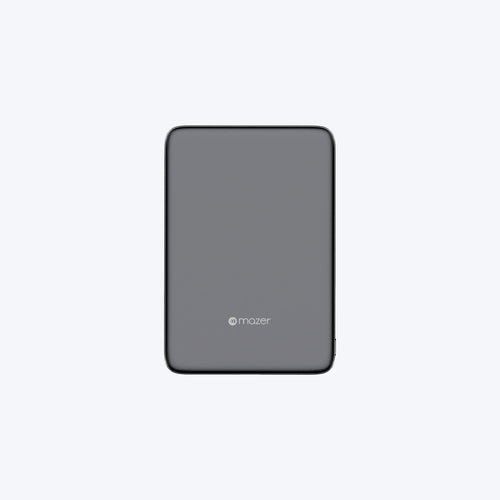 MagAir39 5000mAh Semi-Solid State Ultra Slim Magnetic Wireless Power Bank 15W (CCC + QR)$79.90
More guides like this
Join our community
Get early access to new products, exclusive deals, and free product trials.