

Safety & Battery Tech
Safety & Battery Tech
How to Dispose of a Power Bank Safely in Singapore
Learn how to dispose of a power bank safely in Singapore. Drop old, dead or swollen power banks at ALBA e-waste bins, never the general trash. Full step-by-step guide.

To dispose of a power bank in Singapore, drop it into an ALBA e-waste bin, never your rubbish chute or the blue recycling bin. Power banks contain lithium-ion cells, so under Singapore law they count as regulated e-waste, not general trash. The orange three-in-one ALBA bins sit in most malls, supermarkets and community clubs, and you place the power bank in the centre ICT slot. It is free, it takes seconds, and it keeps a fire risk out of the waste stream.
This guide walks through where the bins are, how to prep a normal power bank, and the extra care a swollen or damaged one needs before it leaves your home. It also covers what actually happens to the battery after collection. Mazer has been building charging gear from Singapore since 2010, trusted by over 500,000 customers and backed by a 24-month warranty, so end-of-life handling is something we take seriously. Read more: Mazer power banks.
The dead power bank in your drawer is a fire waiting to happen
Everyone has one. The old power bank that stopped holding charge, shoved into a drawer next to tangled cables and a dead phone or two. It feels harmless sitting there. It is not entirely harmless, and the moment it goes into the general waste chute is the moment it becomes a real problem.
Lithium-ion cells do not like being crushed, punctured or overheated. When a rubbish truck compacts a load or an incineration plant processes it, a discarded power bank can short internally and catch fire. Singapore has seen enough of these incidents that the National Environment Agency stepped up public education in July 2025 specifically on handling lithium-ion batteries and power banks. The fix is boring and easy, which is exactly why people skip it. Knowing how to dispose of a power bank the right way takes one trip past a bin you already walk past.
Why a power bank counts as regulated e-waste, not trash
Under the Resource Sustainability Act, Singapore runs an Extended Producer Responsibility scheme for e-waste that started on 1 July 2021. Power banks fall squarely inside it. They are classed as ICT equipment with an embedded lithium-ion battery, which makes them regulated e-waste. That is the legal reason you cannot toss one in the general bin: the Towards Zero Waste framework requires every regulated item to go through a funded recycling pathway instead.
The physical reason is energy. A power bank stores its capacity as watt-hours, and even a compact 10,000mAh unit holds around 38.5Wh of energy. That is a meaningful amount of stored power sitting in a sealed cell. When that energy has nowhere safe to discharge and the casing is damaged, it becomes heat. For context, that same 38.5Wh sits well under the 100Wh cap airlines use for carry-on batteries, but it is still plenty to start a fire in a compactor.
This is why the recycling route matters. An ALBA-appointed recycler discharges and dismantles the cell in controlled conditions, then recovers the metals inside. A rubbish truck does none of that. The difference between the two routes is the difference between a recovered battery and a fire report.
How to dispose of a power bank the right way in Singapore
The practical fix has three steps, and none of them cost anything. Here is the routing, side by side, so it is clear which bin does what.
| Item | Correct bin | Never use |
|---|---|---|
| Power bank (working or dead) | ALBA orange e-waste bin, centre ICT slot | General waste chute |
| Loose AA/AAA batteries | ALBA e-waste bin, battery slot | Blue recycling bin |
| Swollen or damaged power bank | ALBA e-waste bin, bagged and sealed | Any bin, unbagged |
Where each item goes. Blue recycling bins are for paper, plastic, glass and metal only, never batteries.
Step one, find the bin. ALBA runs more than 600 collection points island-wide, and the bright orange three-in-one bins live in malls, supermarkets, community clubs and many HDB town centres. Step two, prep the unit. For a normal power bank, tape over the USB-C and any exposed ports so nothing can short in transit. Step three, drop it into the centre ICT slot, the one sized for phones, printers and power banks. That is it.
If you are replacing the old unit anyway, recycle it and upgrade in the same trip. Drop the dead one at an ALBA bin first, then pick up something built to last, like the MagAir20 10,000mAh magnetic power bank, which is CCC certified and UN38.3 passed at $59.90 SGD. A newer, certified unit is also less likely to swell or fail early, which is the whole reason you are reading this in the first place.

The Mazer MagAir20, a CCC certified, UN38.3 passed 10,000mAh power bank.
What to do with a swollen or damaged power bank
A swollen power bank is a different situation, and it deserves more care. If the casing has puffed up, feels hot, smells odd or has started to split, the cell inside is failing. Do not charge it. Do not puncture it to let the gas out. Do not leave it near anything flammable.
The safe handling steps are short:
- Stop using it immediately: unplug it and move it away from your bed, sofa and curtains.
- Bag it: seal a leaking or split unit in a plastic bag before it leaves the house, following NEA guidance for damaged batteries.
- Keep it cool: a non-flammable surface away from heat is fine for the short term, never a hot car or a sunny windowsill.
- Drop it at an e-waste point: take it to an ALBA e-waste bin, bagged, rather than the general bin.
If a battery is actively venting, smoking or too hot to hold, treat it as an emergency and call the SCDF rather than handling it yourself. That is rare, but worth stating plainly.
Small habit, real difference
Disposing of a power bank properly is a two-minute detour past a bin you already pass. It keeps a fire risk out of the waste stream, it recovers the metals inside the cell, and it is exactly what Singapore's e-waste rules are built around. Next time you clear that drawer, bag anything swollen, tape the ports on the rest, and drop them at the nearest ALBA bin. When you are ready to replace one, browse the Mazer power banks collection for a certified unit that is built to last longer than the one you are retiring.
TL;DR
To dispose of a power bank in Singapore, drop it at an ALBA orange e-waste bin (centre ICT slot), never the general rubbish chute or the blue recycling bin. Tape the ports on a normal unit, and seal any swollen or damaged power bank in a bag before you carry it. It is free, and it keeps a lithium-ion fire risk out of the waste stream.
Frequently Asked Questions about power bank disposal
Quick answers to the questions Singapore shoppers ask most about getting rid of an old power bank.
1. Where can I dispose of a power bank in Singapore?
Dispose of a power bank at any ALBA e-waste bin, using the centre ICT slot. The orange three-in-one bins sit in malls, supermarkets and community clubs, with over 600 collection points island-wide, and they are open to every household.
2. Can I throw a power bank in the general rubbish or blue recycling bin?
No. A power bank is regulated e-waste because of its lithium-ion battery, so it cannot go in the general waste chute or the blue recycling bin. Both routes risk a fire and breach Singapore's e-waste rules under the Resource Sustainability Act.
3. How do I dispose of a swollen power bank safely?
Stop using a swollen power bank at once, do not charge or puncture it, and seal it in a plastic bag before it leaves the house. Take it to an ALBA e-waste bin. If it is smoking or too hot to hold, call the SCDF.
4. Is it free to recycle a power bank in Singapore?
Yes, recycling a power bank through ALBA e-waste bins is free. There is no charge for household drop-off, and you can use any ALBA bin island-wide.
5. Do I need to prepare a power bank before dropping it off?
For a normal power bank, tape over the USB-C and any exposed ports so it cannot short in transit, then drop it in the ICT slot. For a leaking or damaged unit, bag it first. You do not need to remove the embedded battery.
6. Why are power banks a fire risk in the rubbish?
Power banks store energy in lithium-ion cells, and even a 10,000mAh unit holds around 38.5Wh. When a rubbish truck compacts or an incinerator processes a discarded power bank, the cell can short and ignite, which is why NEA stepped up public education on this in 2025.
7. What if there is no ALBA bin near me?
With more than 600 collection points island-wide, there is usually one at a mall, supermarket or community club close to home. Check the bin locations listed on the ALBA website, then keep the taped-up power bank somewhere cool until you pass the nearest one.
8. What happens to a power bank after it is collected?
Collected power banks go to ALBA-appointed licensed recyclers, where the cell is discharged and dismantled in controlled conditions and the metals inside are recovered. This is the safe pathway that a general waste route cannot provide.
Get 15% off your first order
If you are retiring an old power bank, it is probably time for one built to outlast it. Join the Mazer mailing list for 15% off your first purchase, plus first word on new charging releases. A certified, longer-lasting unit is the easiest way to avoid the swollen-battery problem next time.
About Mazer
Founded in 2010, Mazer is a Singapore-based brand trusted by over 500,000 customers, with 1.8M+ units sold, offering high-quality, smarter, and eco-friendly technology designed for everyday life #mazer
Shop this guide
 MagAir20 10,000 mAh Magnetic Wireless Power Bank (CCC + QR)$59.90
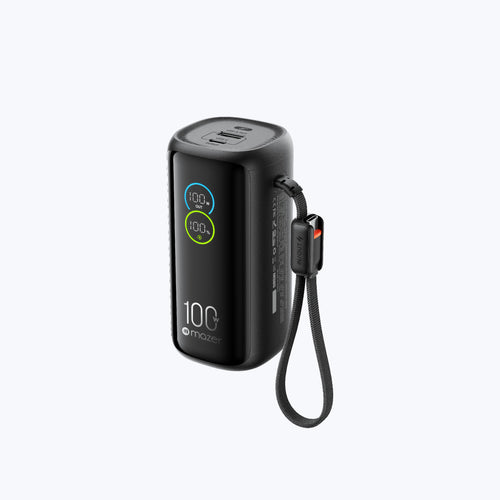 PowerCharge Link 20,000mAh PD100W Power Bank with Built-in USB-C Cable$99.90
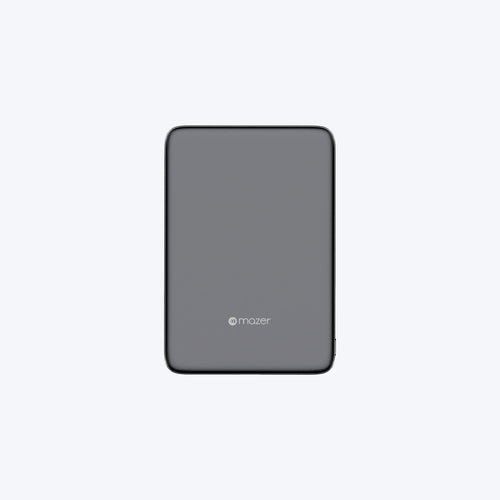 MagAir39 5000mAh Semi-Solid State Ultra Slim Magnetic Wireless Power Bank 15W (CCC + QR)$79.90
 PowerCharge Nano Duo 10,000mAh PD35W Power Bank with Built-in Dual USB-C Cables (CCC + QR)$62.90
More guides like this

Safety & Battery Tech
Travel Adapter for China: Plug Types, Voltage and the CCC Rule Nobody Mentions

Safety & Battery Tech
Apple MagSafe Battery Alternatives in Singapore: Qi2 and Qi2.2 Compared
Join our community
Get early access to new products, exclusive deals, and free product trials.