
Travel
Travel Adapter for Korea: Type C and F Plugs for Seoul and Busan
A Korea travel adapter is all you need from Singapore: Korea runs 220V on Type C and F sockets, so no converter. Plug shapes, wattage and packing tips.

A Korea travel adapter is all you need from Singapore, and no voltage converter. South Korea runs on 220V, close to Singapore's 230V, so your phone, laptop and even your hair dryer work as they do at home. The only change is the plug shape: Korean sockets take round two-pin Type C and Type F plugs, so our three-pin Type G will not go in.
That makes Korea one of the simplest charging destinations for Singapore travellers, as long as the right pin is in your bag before you leave. This guide covers what Korean sockets look like, the one small frequency difference worth knowing about, how much charging power a Seoul or Busan itinerary needs, and where to buy an adapter if you forget. Mazer has designed travel chargers in Singapore since 2010, trusted by more than 500,000 customers, with a 24-month warranty on every product. Here is everything you need, in the order you need it.
Korea travel adapter basics: Type C and F, 220V, no converter
The first evening in a Myeongdong hotel tells you everything. A round, recessed socket with two holes, sometimes with small metal clips at the sides. Your Singapore plug is not going anywhere near it.
According to WorldStandards' South Korea page, Korea has standardised on Type F sockets and plugs, and Type C (the slimmer two-round-pin Europlug) fits them too. New ungrounded Type C sockets are generally no longer installed, so the grounded Type F is what you will meet in most hotels, apartments and cafés.
Why you do not need a voltage converter
This is the bit that removes most of the worry. Korean mains electricity runs at 220V, and Singapore runs at 230V. Any device rated "100 to 240V" (almost every phone, laptop and camera charger) or "220 to 240V" (most Singapore hair dryers and straighteners) works normally. A plug adapter is enough. Save your money on the heavy step-down converter; Korea is not Japan.
The one difference: 60Hz
Korea's grid runs at 60Hz, while Singapore uses 50Hz. For chargers marked "50/60Hz", which covers virtually every modern one, this changes nothing. Some older motor-driven appliances or clocks may behave slightly differently, but that rarely affects a travel bag.
| Item | Singapore | South Korea | What you need |
|---|---|---|---|
| Plug type | Type G (three rectangular pins) | Type F, also accepts Type C | EU-style round two-pin plug |
| Voltage | 230V | 220V | No converter |
| Frequency | 50Hz | 60Hz | Nothing, if the charger says 50/60Hz |
| Hair dryer (220 to 240V) | Works | Works | Plug adapter only |
| Phone and laptop chargers | Works | Works | Plug adapter only |
Table: Singapore vs South Korea electricity at a glance
How much charging power a Seoul or Busan trip needs
Korea is hard on batteries in a specific way. Naver Map open all day because Google Maps navigation is limited there, KakaoT for taxis, translation apps at every restaurant, and a camera roll that fills up between Bukchon and Seongsu. By the time you are back in the room, every device wants a socket.
Winter makes it worse. Lithium batteries lose charge faster in the cold, so a phone that lasts all day in Singapore can fade by mid-afternoon on a sub-zero January walk along the Cheonggyecheon stream. You will be charging more often than you expect, which is a good reason to bring a charger fast enough to top up during a short hotel stop between sights, rather than a slow 5W cube that needs the whole night.
The answer depends on what you carry. A phone alone is comfortable at 20W to 30W, although Apple's fast charging guidance lists 40W or higher for the iPhone 17 line to reach its top wired speed. Laptops vary more: Apple's Mac power adapter guide pairs recent MacBook Air models with 30W to 70W adapters and the 14-inch MacBook Pro with 67W to 96W.
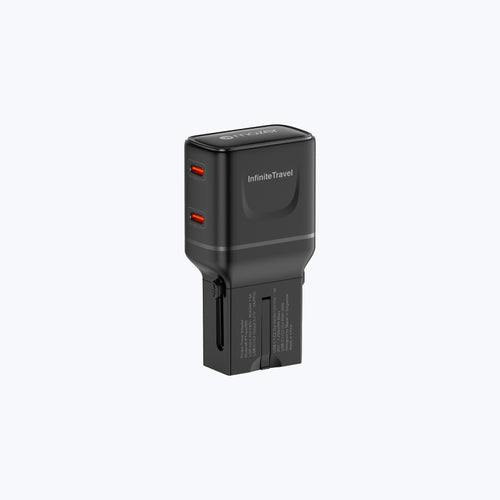
For most Singapore travellers with a phone, earbuds and a light laptop, the InfiniteTravel Pocket 65W Universal Travel Charger ($59.90 SGD) covers the whole trip. It ships with US, UK, EU and AU pins, so you click on the EU pin for Korea, and the pin-lock system keeps it seated in the socket. One USB-C port gives up to 65W, enough for a MacBook Air, and with two devices it splits to 45W plus 20W. It weighs 106g, and the input is rated 100 to 240V, so it also works on any later trip to Japan.

InfiniteTravel Pocket 65W with the EU pin for Korean sockets
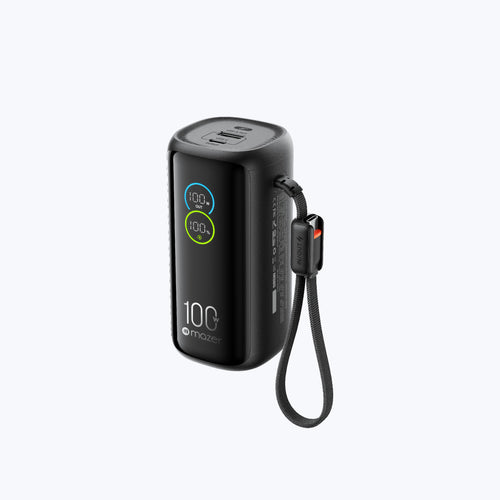
Phone and tablet only? The InfiniteTravel Pocket 45W ($39.90 SGD, 90g) delivers up to 45W from one port, or 25W plus 20W across two, which handles two phones at proper speed. Travelling as a family with laptops and tablets in the mix is a different story. The 100W model listed for Korea is currently sold out, so worth checking back, and the Infinite Travel PD160W ($129.90 SGD) is the in-stock alternative, with three USB-C ports and a USB-A, up to 140W from one port.
Where to buy a travel adapter in Korea (if you forget)
It happens. You arrive at Incheon, open your bag, and the adapter is still on the HDB console table at home. The good news is that Korea makes this easy to fix.
Convenience stores such as GS25, CU and 7-Eleven, Daiso branches, and shops at Incheon Airport generally stock simple plug adapters. Koreans often call them "dwaejiko" (돼지코), meaning "pig nose", because of the two round holes. They are cheap and they work, but they only change the plug shape. You still need your own charger plugged into them, and the bulkier ones can sit loosely in a recessed socket. A charger with built-in pins and multiple USB-C ports does both jobs in one.
A quick honest aside: if your hotel is a newer business hotel in Seoul, you may find a USB port built into the bedside lamp. It is usually slow. Do not count on it for a laptop.
Korea packing checklist for charging
Run through this before your Changi check-in.
- Plug: Pack an EU-style round two-pin plug or charger, which fits Korea's Type F and Type C sockets.
- Voltage: Skip the converter, since Korea's 220V is close to Singapore's 230V.
- Frequency: Confirm your chargers read 50/60Hz on the label, which almost all modern ones do.
- Wattage: Choose 45W for phones and tablets, 65W if a laptop is coming, more for a family setup.
- Power bank: Carry it in your cabin bag, bring no more than two, and do not charge it on board.
The power bank rules come from the Civil Aviation Authority of Singapore's April 2026 safety bulletin. It limits passengers to two power banks, keeps them out of checked baggage, and says they must not be charged on board. Power banks up to 100Wh are allowed in the cabin; between 100Wh and 160Wh you need airline approval.
Sort the plug, forget the converter
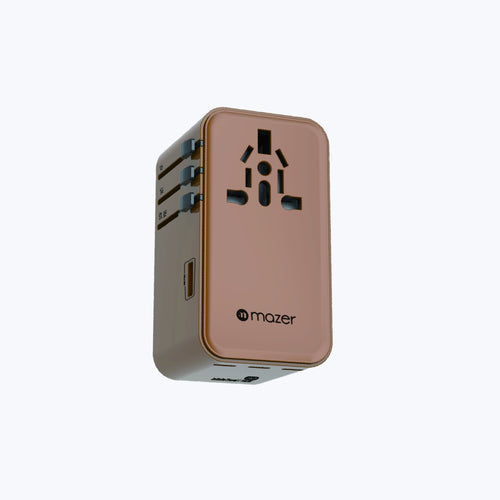
Korea is the easy one. The voltage matches closely enough that nothing in your Singapore bag needs converting, so the whole job is a round two-pin plug that sits firmly in a Type F socket. Bring one compact charger with an EU pin and enough ports for everything that charges overnight, and you are done. For a phone-and-tablet trip, the InfiniteTravel Pocket 45W is plenty, and the Pocket 65W steps in when a laptop joins. Compare wattages and pin options across the Mazer travel adapter collection before you fly to Seoul or Busan.
TL;DR
A Korea travel adapter only needs to change the plug shape, because South Korea uses 220V on Type C and F sockets and Singapore uses 230V on Type G. No voltage converter is required. A compact charger with an EU round two-pin plug covers Seoul, Busan and the rest of the country.
Frequently Asked Questions about Korea Travel Adapters
These quick answers cover what Singapore travellers ask most before a South Korea trip.
1. Do I need a travel adapter for South Korea from Singapore?
Yes. South Korea uses round two-pin Type C and Type F sockets, while Singapore uses three-pin Type G plugs that will not fit. Bring an EU-style plug adapter or a travel charger with an EU pin. You do not need a voltage converter.
2. Do I need a voltage converter for Korea?
No. South Korea runs at 220V, very close to Singapore's 230V. Devices rated 100 to 240V or 220 to 240V, including most Singapore hair dryers, work normally. You only need a plug adapter to fit the socket.
3. What plug type is used in South Korea?
South Korea has standardised on Type F, a grounded socket with two round pins. Type C plugs, the slimmer two-round-pin Europlug, also fit Type F sockets. Both are the same shape family used across much of Europe.
4. Can I use a European adapter in Korea?
Yes. European Type C and Type F plugs fit Korean sockets, so an adapter or charger that works in Germany or France will also work in Seoul and Busan. Korea's voltage is close to Europe's as well.
5. Where can I buy a travel adapter in Korea?
Convenience stores such as GS25, CU and 7-Eleven, Daiso branches and Incheon Airport shops generally sell basic plug adapters. They only change the plug shape, so you still need your own charger plugged into them.
6. Does the 60Hz frequency in Korea affect my chargers?
Not if they are rated 50/60Hz, which almost every modern phone, laptop and camera charger is. Korea uses 60Hz and Singapore uses 50Hz, but chargers convert the power internally, so the difference has no practical effect on charging.
7. Can I use my Singapore hair dryer in Korea?
Usually yes. Most Singapore hair dryers are rated 220 to 240V, which suits Korea's 220V supply. You only need a plug adapter with round pins, since the hair dryer's Type G plug will not fit Korean sockets directly.
8. Is a universal travel adapter worth it for Korea?
Yes, if you travel regularly. A universal charger with interchangeable pins uses its EU pin in Korea and switches to US, UK or AU pins on later trips, so one device replaces several single-country adapters.
9. Do I need a different adapter for Busan or Jeju?
No. Busan, Jeju and the rest of South Korea use the same 220V supply and Type F sockets as Seoul. One EU-style plug or travel charger works throughout the country, including hotels, guesthouses and most cafés with power outlets.
Get 15% off your first order
Planning a Seoul or Busan trip? Join the Mazer mailing list for 15% off your first order, plus travel charging tips and new product updates in your inbox.
About Mazer
Founded in 2010, Mazer is a Singapore-based brand trusted by over 500,000 customers, with 1.8M+ units sold, offering high-quality, smarter, and eco-friendly technology designed for everyday life #mazer
Shop this guide

More guides like this


Join our community
Get early access to new products, exclusive deals, and free product trials.